
WHICH IS BETTER FOR FAT LOSS- CARDIO OR WEIGHTLIFTING?

People who start exercising to lose weight prefer cardio over resistance training. No doubt, cardio helps lose weight, but cardio alone is not a good recipe for faster fat loss. So, the question is, what should a person do if his/her goal is to lose body fat? Let’s find out;
Before looking at the research studies on this topic, it is essential to understand the difference between fat loss and weight loss. Our total body weight includes three things- Skeleton muscle mass( Including bones), water weight, and fat mass. Losing muscle mass and water weight is not considered healthy for us. For every overweight person, the aim should be lowering body fat percentage, not muscle mass or water weight. I generally do not recommend my clients check their weight on a weight scale because their total weight does not matter (with some exceptions). Instead, I ask them to check their body fat percentage at least once a month.
When we do high-intensity cardio, we sweat a lot. So if you check your weight on a weight scale immediately after a tough cardio session, you will see a slight reduction in your body weight because, through sweat, you lose a lot of body water. But this is a very short-term phenomenon because after drinking even a glass of water, your weight will come to normal. So sweating more does not mean more fat loss.
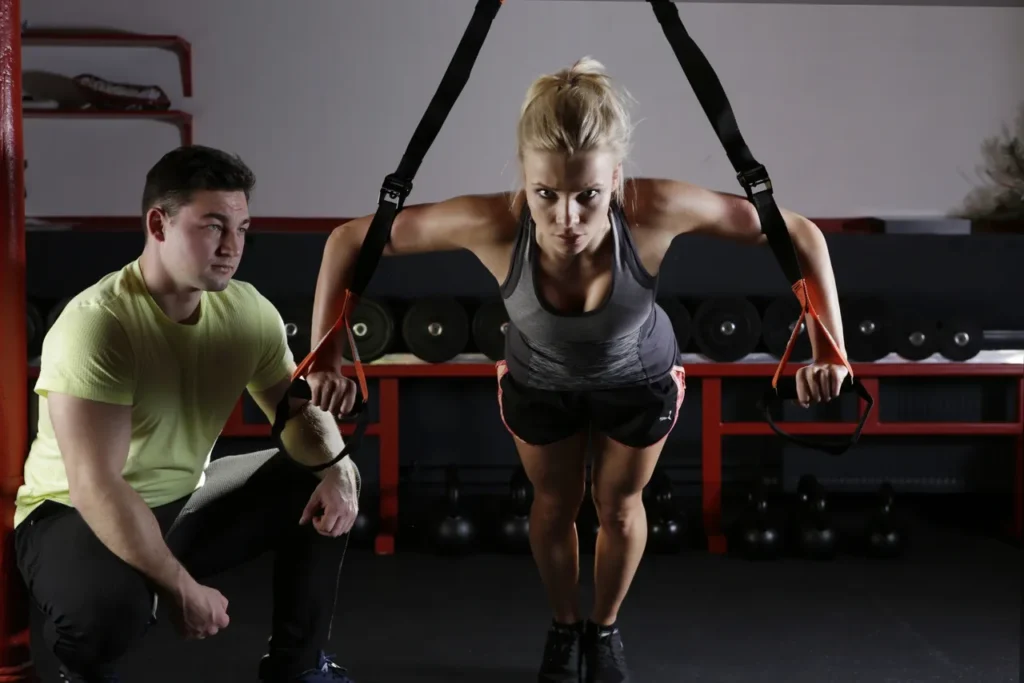
No doubt, a single high-intensity cardio session burns more calories than a resisting training session, but there is a catch. Resistance training helps us burn calories during that session and later that day, even at rest. Why? This happens because of the phenomenon called EPOC (excess post-exercise oxygen consumption). According to research, this EPOC can last up to 24-48 hours post-resistance training session. This does not happen after a cardio session unless you combine cardio with resistance exercises. Although the amount of calories we burn due to EPOC is not much, it can provide significant results in the long run. So, our goal isn’t just to burn calories but to reduce body fat levels.
The research study that supports aerobic training over resistance training for fat loss does not differentiate between fat loss and lean mass loss. According to this research study, aerobic training alone results in more fat loss than resistance training and resistance training plus aerobic training. But this research study did not consider the amount of lean muscle mass lost due to aerobic training.
A similar study conducted by scientists at Duke University on 196 obese or overweight men and women ranging from 18 to 70 years old split them into three groups:
· Group one did three one-hour resistance training workouts per week
· Group two jogged three days per week at a moderate intensity for about 45 minutes per session
· Group three did both the resistance training and cardio workouts.
Which group lost the most weight? It was group 2- the cardio-only group. But, this was the only group that lost muscle as well. On the contrary, group 3 (resistance plus cardio group) lost the fattest while also gaining muscles.
One more benefit of gaining muscle mass is an increase in resting energy expenditure (REE). The more muscle you carry, the higher your resting energy expenditure (REE). Each kilogram of muscle uses at least 10 kcal per day. Suppose you gain 10kg muscle mass; your body will burn 100 extra calories daily, even at rest.
To conclude, we can say that a combination of resistance and aerobic training is the best way to lose fat and build muscles simultaneously.
Jobanpreet Singh
References
Schoeller DA, Ravussin E, Schutz Y, Acheson KJ, Baertschi P, Jequier E. Energy expenditure by doubly labeled water: validation in humans and proposed calculations. Am J Physiol Endocrinol Metab 1986; 250: R823–30.
Bryner RW, Ullrich IH, Sauers J, Donley D, Hornsby G, Kolar M, Yeater R. Effects of resistance vs. aerobic training combined with an 800 calorie liquid diet on lean body mass and resting metabolic rate. J Am Coll Nutr. 1999 Apr; 18(2):115-21.
Slentz CA, Houmard JA, Kraus WE. Modest exercise prevents progressive disease associated with physical inactivity. Exerc Sport Sci Rev 35: 18–23, 2007 [PubMed] [Google Scholar]
Categories
Sign up for blog updates!
Join my email list to receive updates and information.